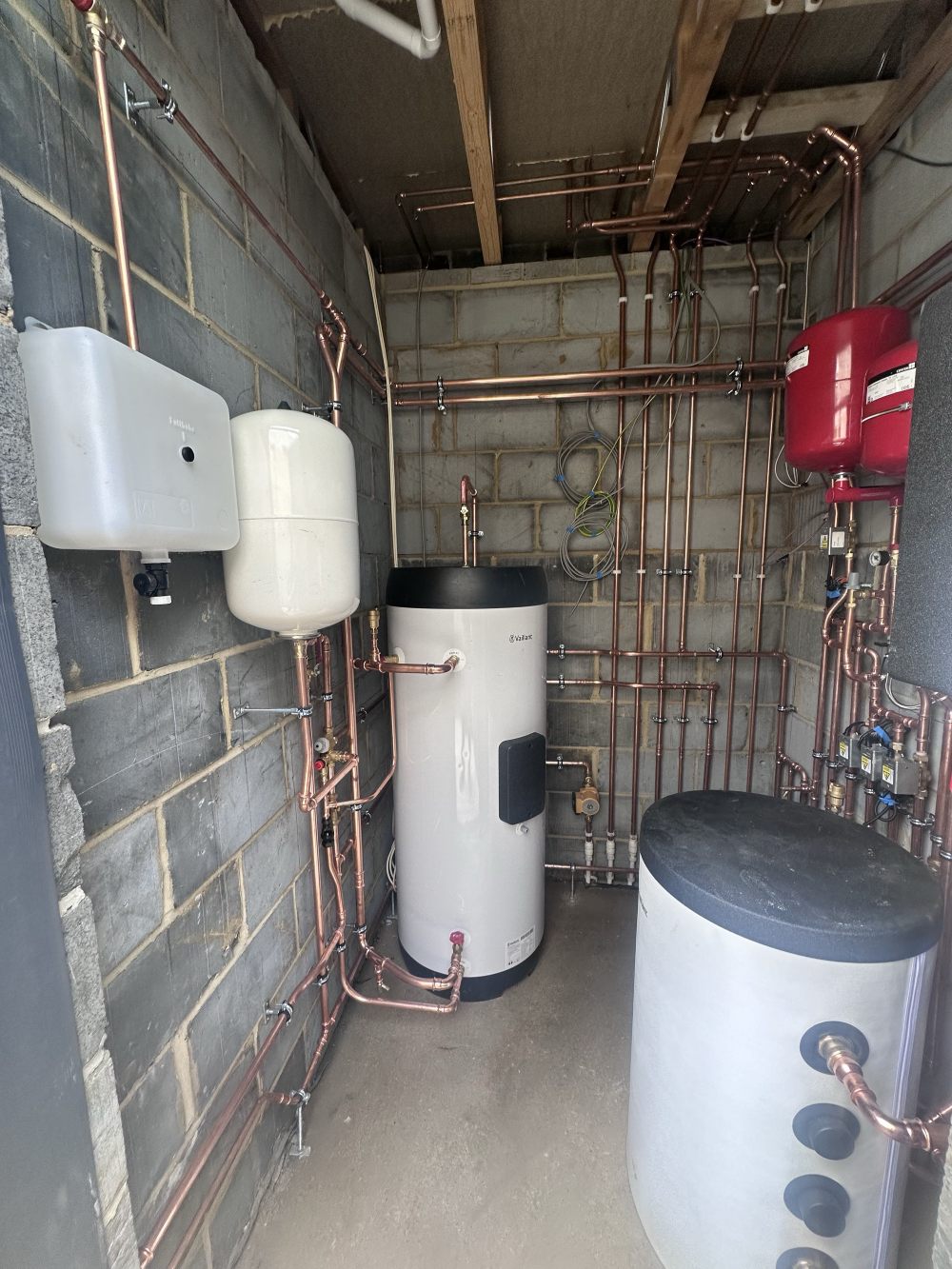
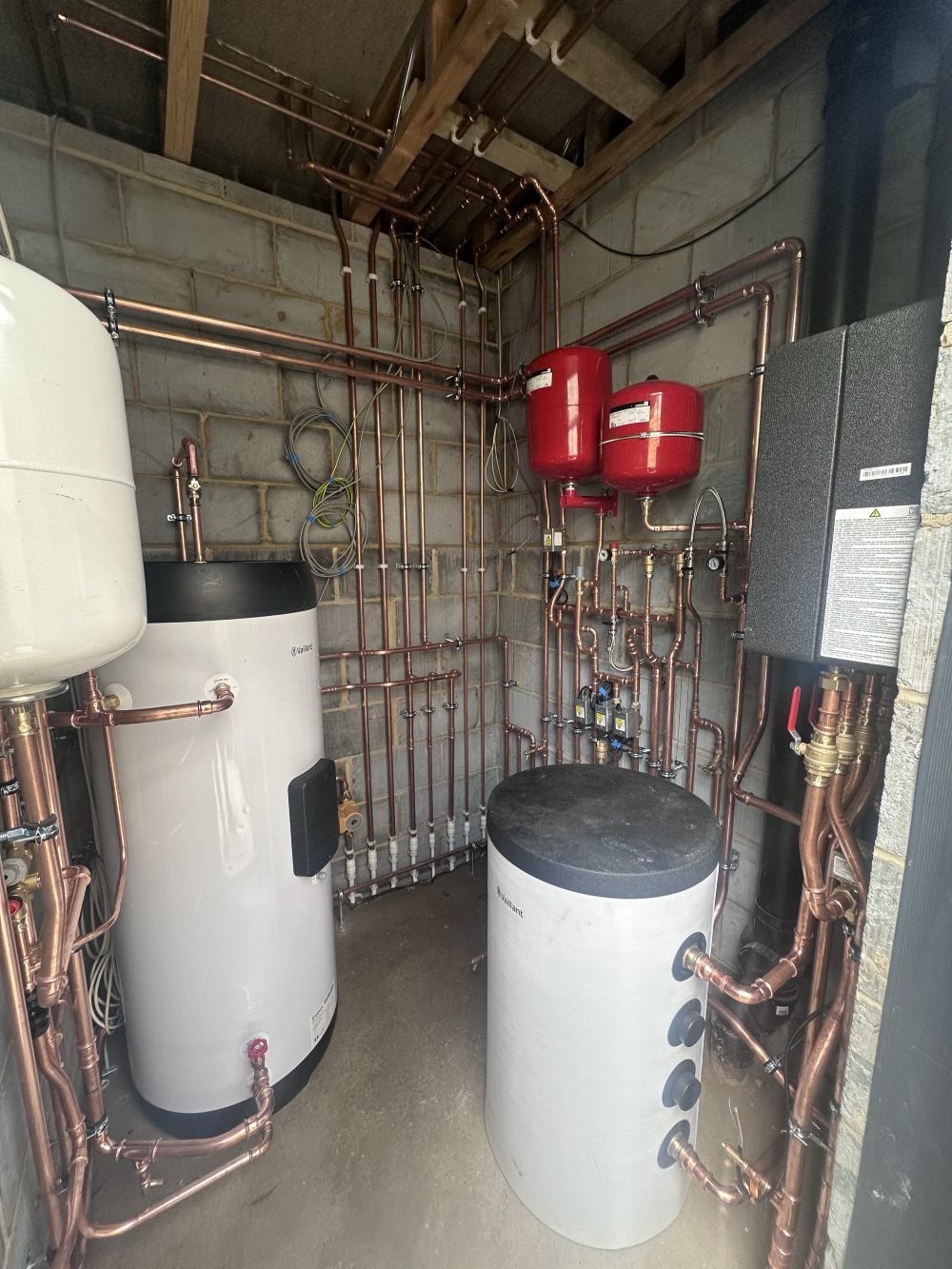
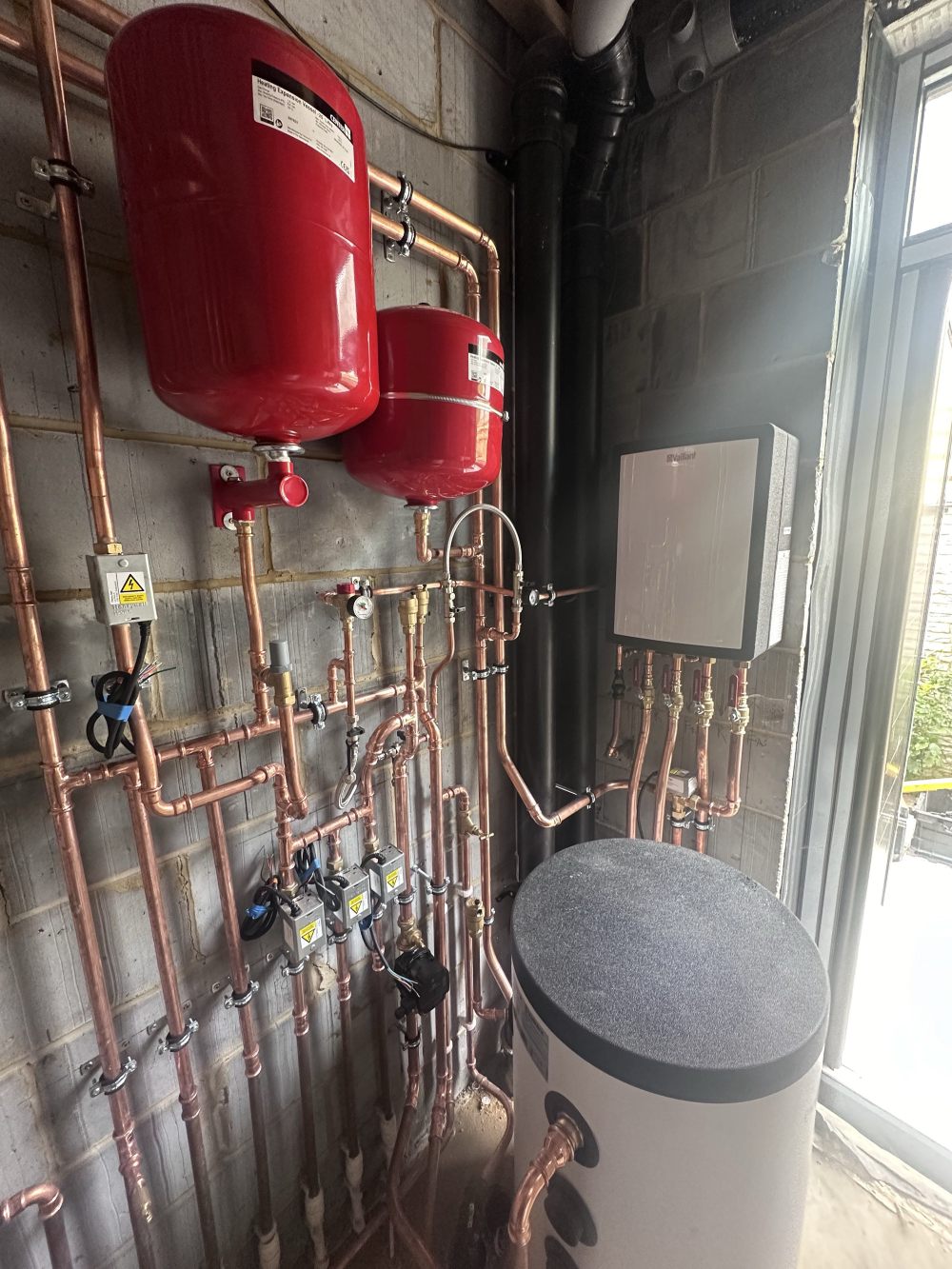
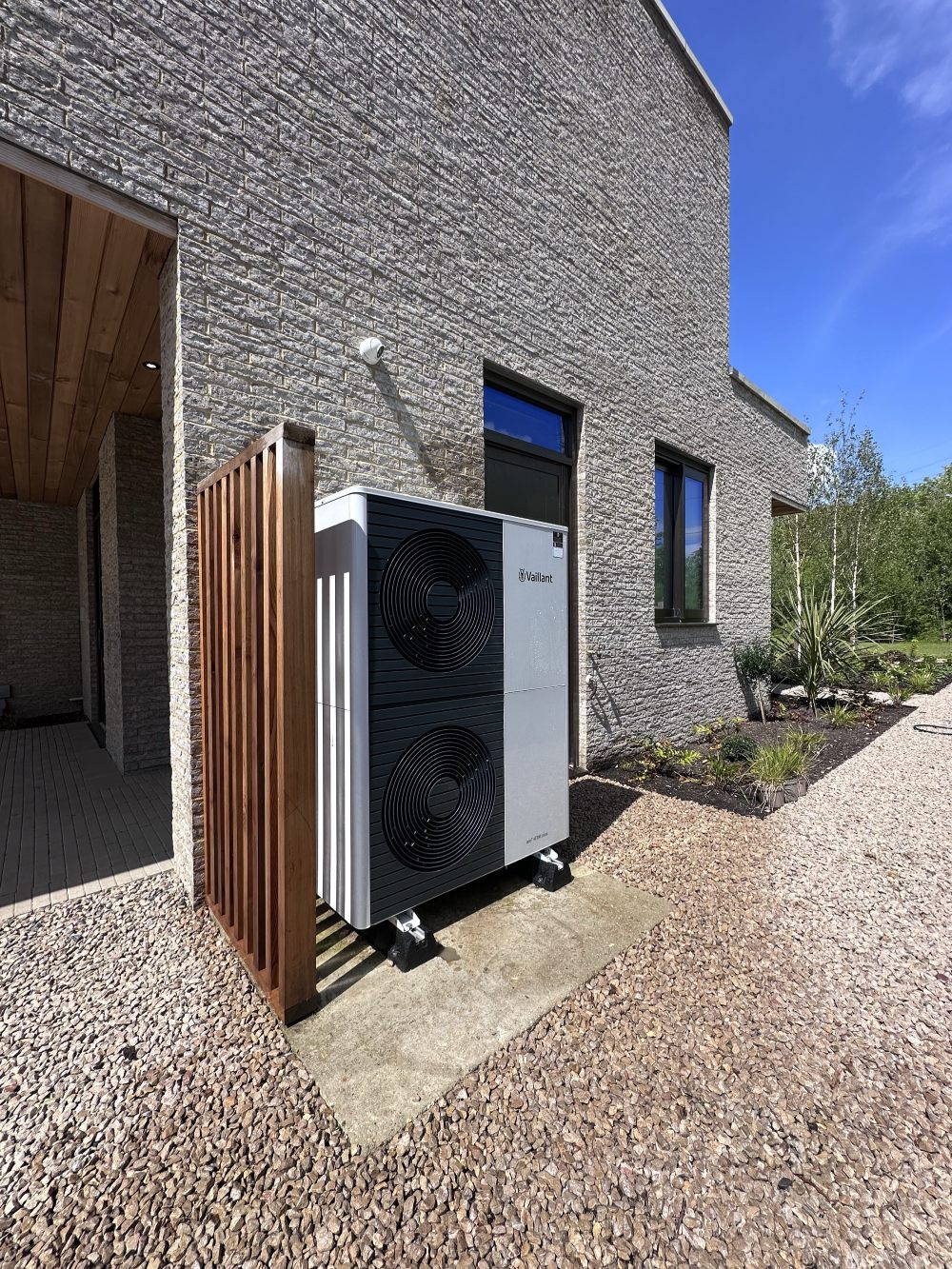
The best way to explain how a heat pump works is by comparing it to a refrigerator. Essentially, all the components of a heat pump are similar to those in a refrigerator, as they perform the same basic functions. The key difference is that a heat pump operates in reverse.
An air source heat pump functions much like a refrigerator operating in reverse to heat your home. Here’s a step-by-step breakdown of the process:
Outside air is blown over a network of tubes filled with a refrigerant. This process warms up the refrigerant, causing it to change from a liquid into a gas.
The refrigerant gas then passes through a compressor, which increases its pressure. This compression also adds more heat, similar to how an air hose warms up when you increase the air pressure in your car’s tires.
The hot, compressed gases then pass into a heat exchanger, which is surrounded by cool air or water. The refrigerant transfers its heat to this cool air or water, warming it up.
The now-warm air or water is circulated around your home to provide heating.
Meanwhile, the refrigerant condenses back into a cool liquid and the cycle begins again.
By continually transferring heat from the outside air to your home, a heat pump provides efficient and effective heating, even in cooler weather.
You may be eligible for the government boiler upgrade scheme. This is where a grant of £7,500 can be used to part pay for the installation of your air or ground source heat pump.
Environmental Benefits
Economic Benefits