
Tightness testing & purging
Commercial gas tightness testing and purging
New gas pipework has to be proved sound and cleared of air before anything is lit. We strength test, tightness test and purge commercial installations across Sussex and London, and leave you the records.
Any time commercial gas pipework is installed, extended, altered or opened up, it has to be tested before it goes back into service, and new or emptied pipework has to be purged so the only thing inside it is gas. Get it wrong and the risk is a leak you cannot see, or an appliance that will not light because the line is full of air.
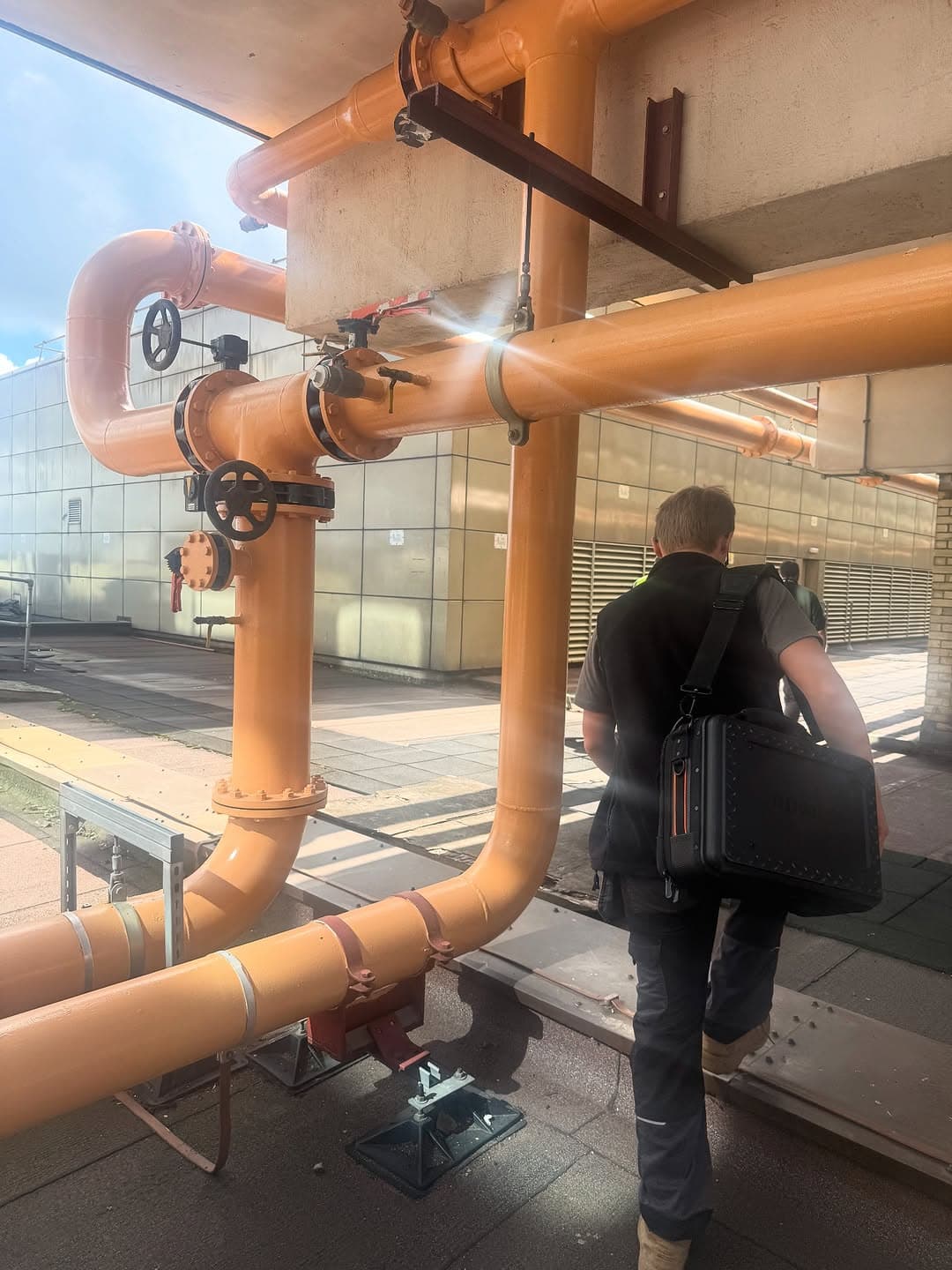
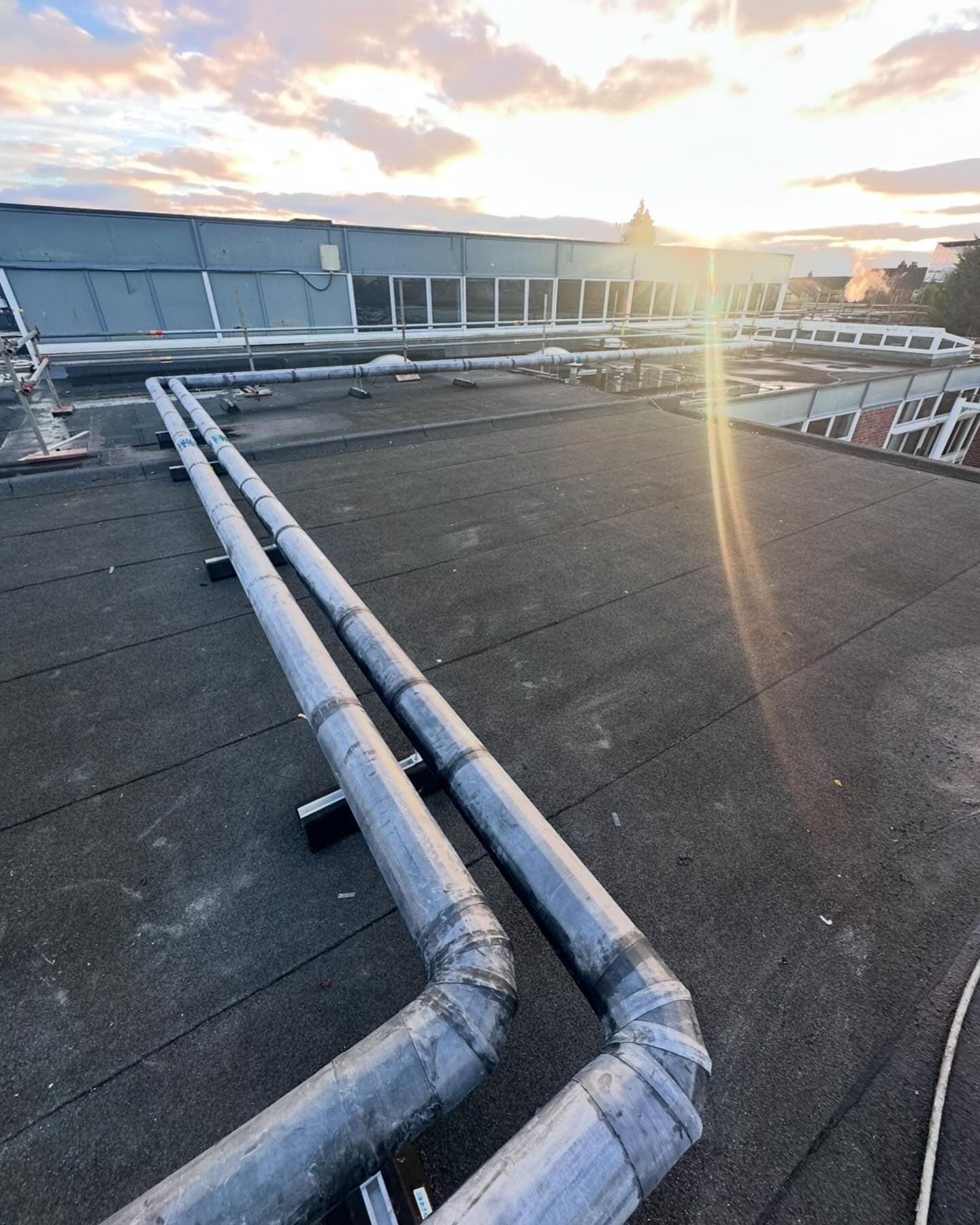
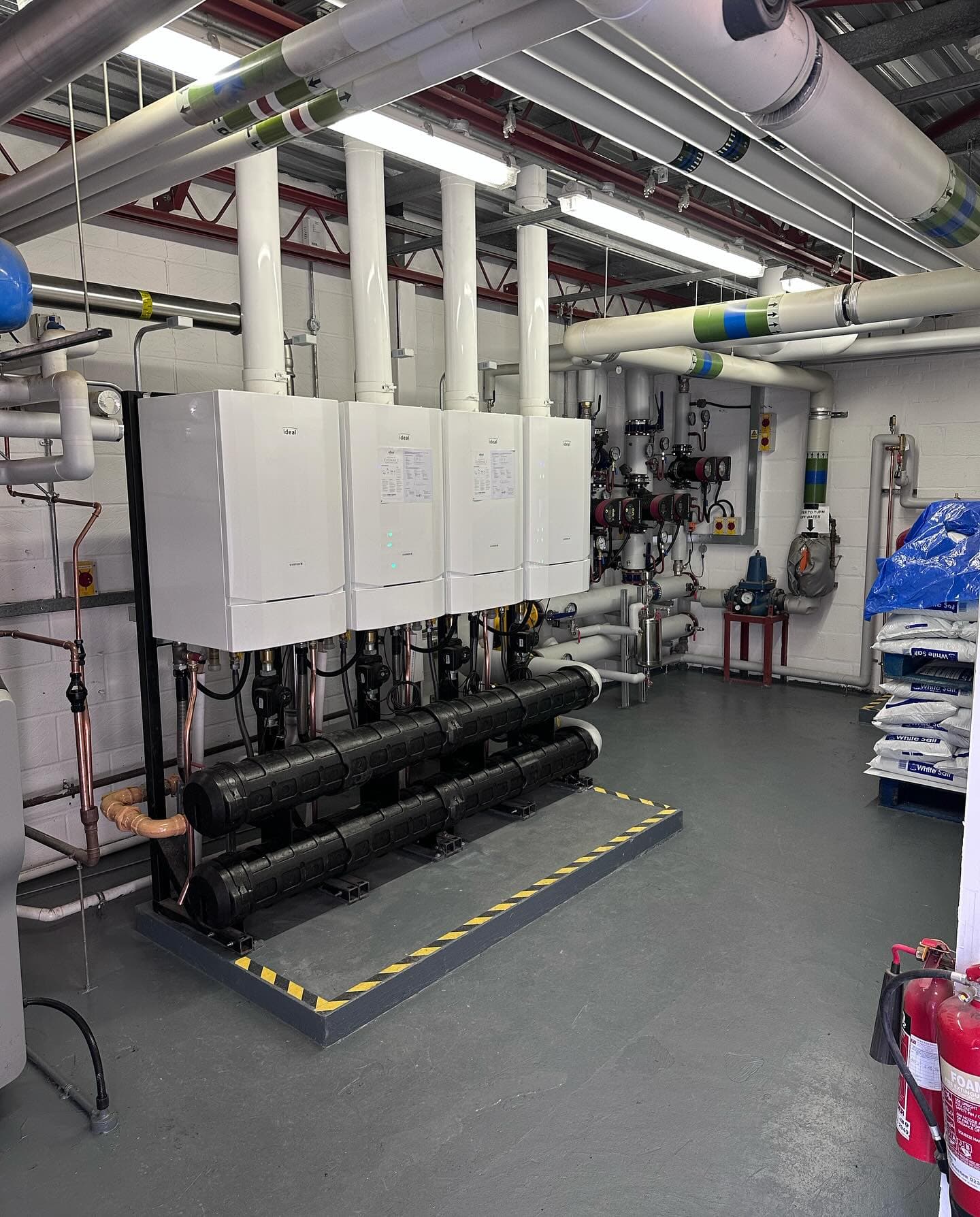
We carry out strength testing, tightness testing and purging on commercial installations of every size, from a short run to a single appliance up to large-bore mains. We have purged and tested commercial gas systems at an airport and in central London, and installed and tested a 100mm stainless steel gas main feeding four boilers.
What's included
- Strength testing of new pipework
- Tightness testing of new, altered and existing installations
- Let-by checks on isolation valves
- Direct purging of new or emptied pipework
- Purging gas out of pipework being taken out of service
- Gas booster and solenoid valve sets tested and purged
- Test and purge records for your file
- Natural Gas and LPG
When you need it
The short answer is whenever the gas side of a building changes. In practice that means:
- A new gas supply or new pipework
- Extending a supply to a new boiler or plant room
- Replacing a section of pipework or a valve
- Before appliances are commissioned on a new install
- After a gas escape has been repaired
- Before a supply that has been off is put back into use
- When pipework is being cut out or decommissioned
- As part of a gas safety inspection
How the work runs
First, a strength test on new pipework, at a pressure above what it will see in service, to prove the joints and fittings hold. Then a tightness test at working pressure to prove there is no measurable leak over the test period, with valves checked for let-by so the result can be trusted.
Only once the installation has passed do we purge. On new pipework that means displacing the air with gas, safely and to a vented point, until the gas at the far end is pure enough to light. On pipework coming out of service it works the other way, clearing the gas out before the line is cut. With the line purged, appliances can be commissioned and the supply handed over.
Every test is recorded: the section tested, the pressures, the duration and the result. The test and purge record goes in your file alongside the commissioning paperwork.
Large-bore pipework and boosters
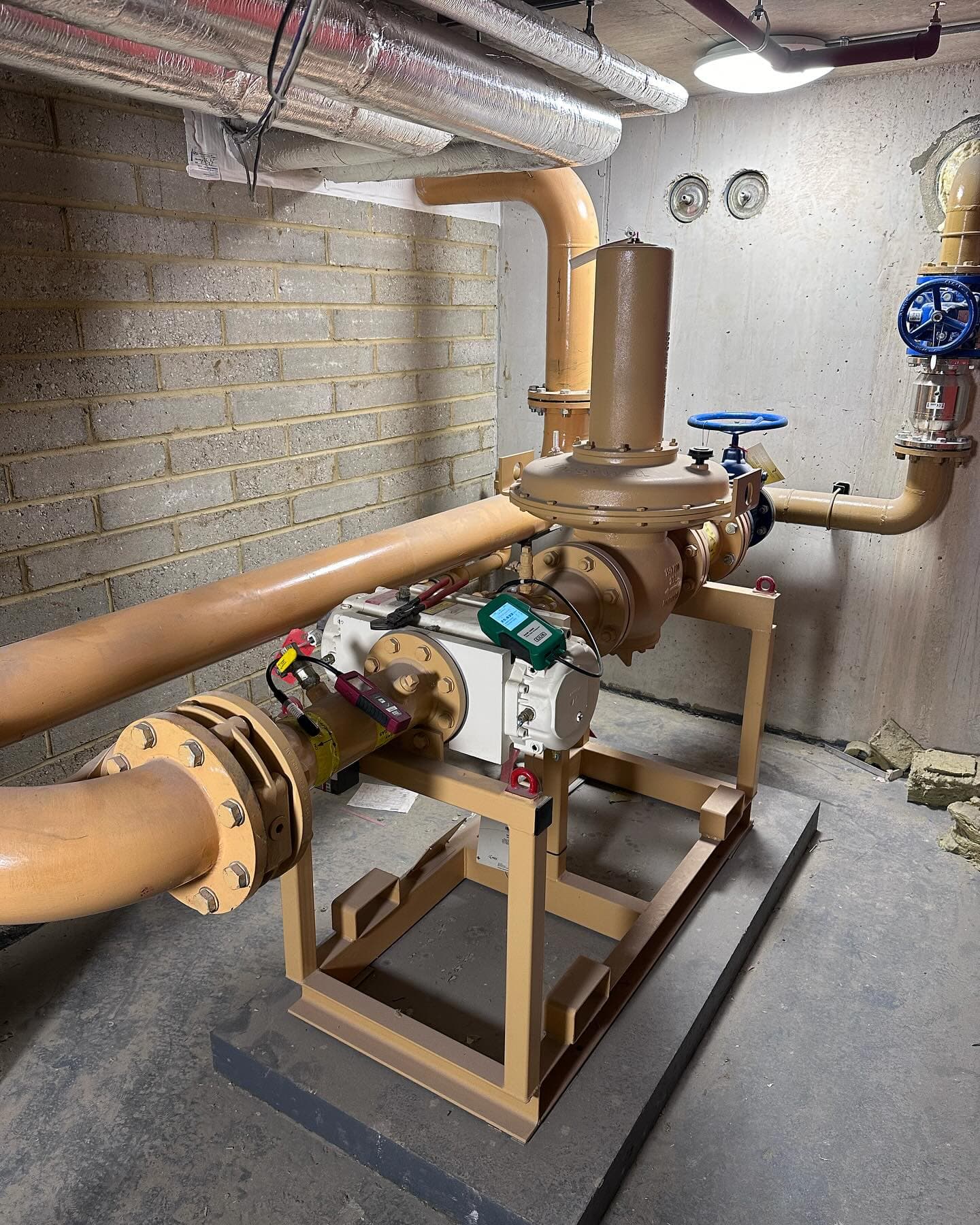
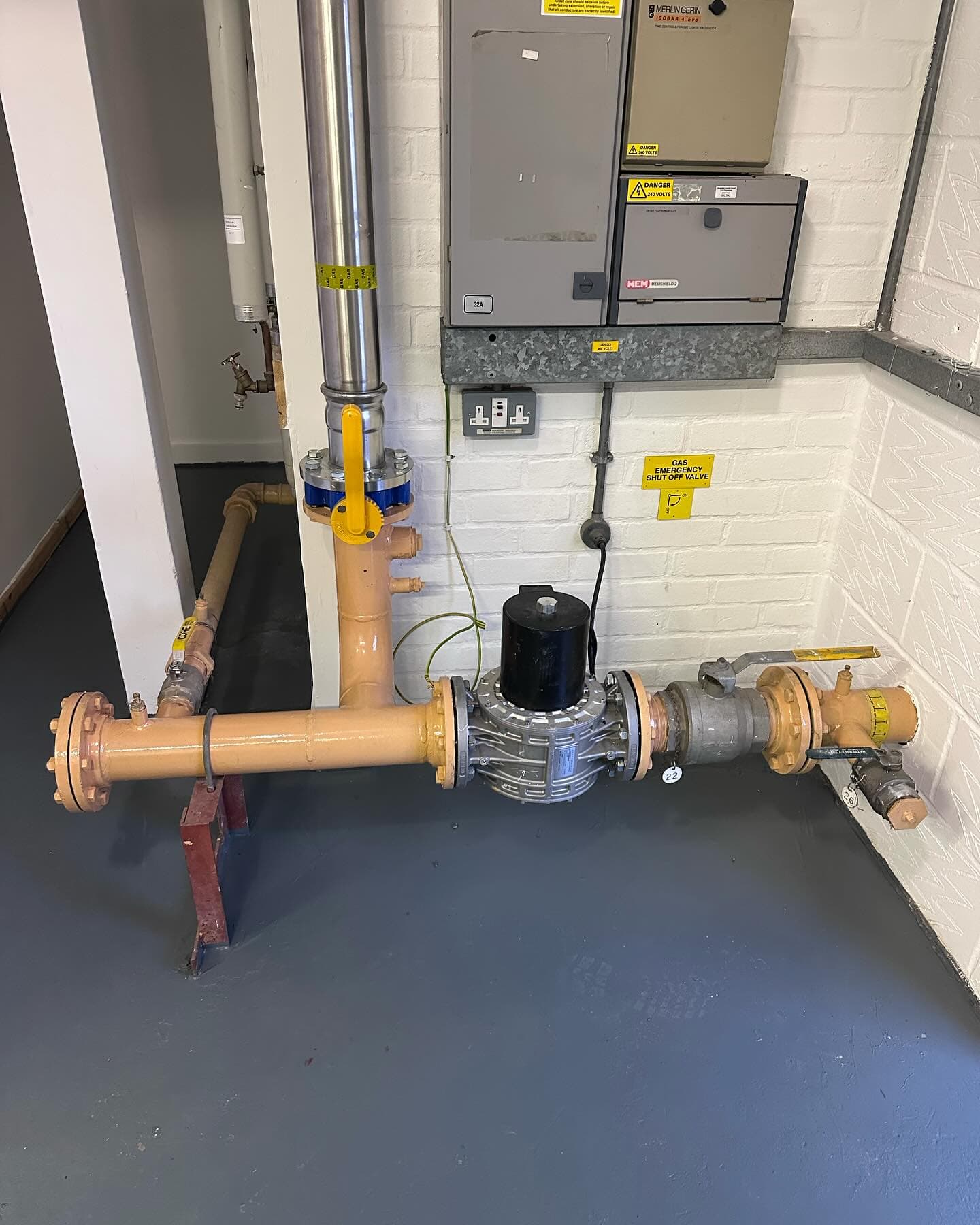
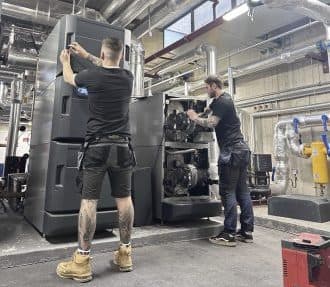
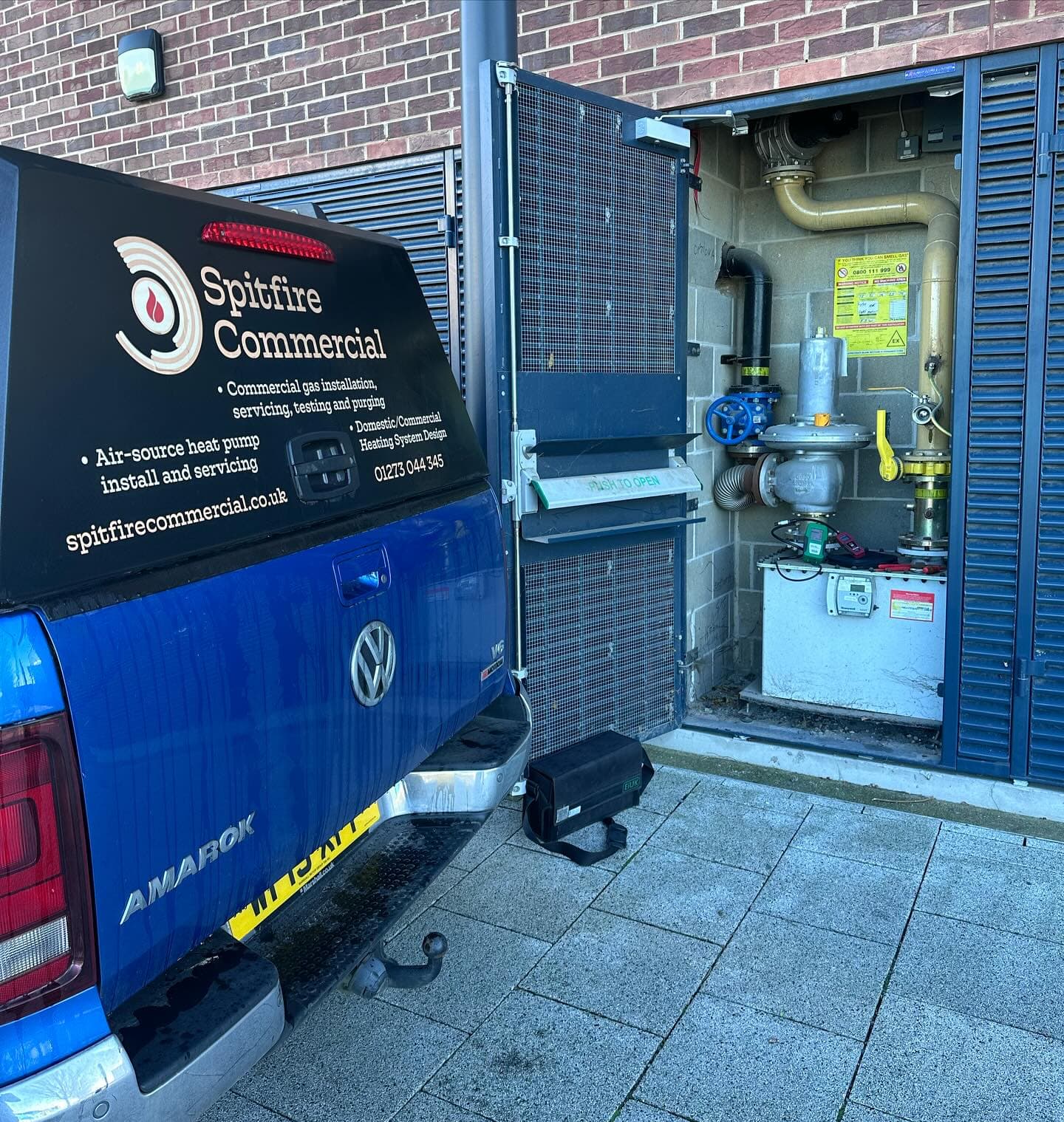
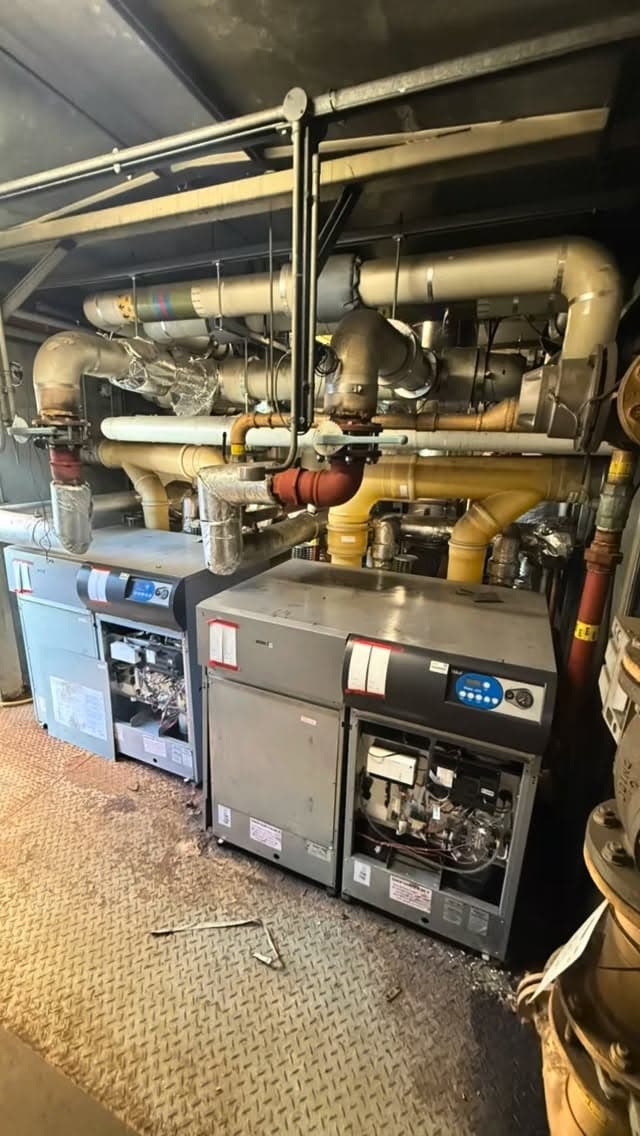
Large commercial installations are a different job from a small supply. The pipework volume is larger, purging takes planning, and boosters, solenoid valves and gas cages all have to be tested as part of the system. On one recent job we installed a plant room solenoid valve and 100mm stainless steel gas pipework to feed four boilers and a gas cylinder.
If you are a main contractor or FM company, tell us the programme and we will plan the testing and purging around it, with the records you need for your handover pack.
Case studies
Work like this
Services
Related gas services
Sectors
Who we do this for
Before you call
Tightness testing and purging: common questions
What is the difference between a strength test and a tightness test?
A strength test proves new pipework and joints can withstand a pressure higher than they will see in use. A tightness test proves the installation does not leak at working pressure. New commercial pipework normally gets both. Existing installations get a tightness test.
Why does new gas pipework need purging?
New pipework is full of air. Until that air is replaced with gas, appliances will not light reliably, and a mixture of gas and air in the pipe is a hazard. Purging clears it in a controlled way before the appliances are commissioned.
Can you test and purge pipework someone else installed?
Yes. We test the installation as we find it and record the result. If it fails, we find the leak and tell you what needs putting right before the supply goes into use.
Do I get a record of the test?
Yes. Every test and purge is recorded with the section tested, pressures, duration and result, so you have evidence for your compliance file, your insurer or the client handover.
Do you work outside Sussex?
Yes. Most of our work is in Brighton and Sussex, and we carry out commercial gas testing and purging in London and across the South East.
Get a quote
Tell us about the building and the job. We will come back with a price or arrange a survey, usually within one working day. Small job? Call 01273 044345.
- Direct line
- 01273 044345
- Coverage
- Brighton & Hove, East and West Sussex, with commercial projects across London and the South East
Tell us about the building
Send us the details and we will come back within one working day with a price or a survey date. If the project is not right for us, we will say so straight away.
Small job, like a gas safety certificate or reconnection? Call 01273 044345.