
Commercial heat pumps
Commercial heat pumps: air source and ground source, designed as a whole system
MCS accredited air source and ground source heat pump design and installation for commercial buildings, developments and large residential blocks. Where a heat pump is the right answer we design, install and commission it; where it is not, we will tell you.
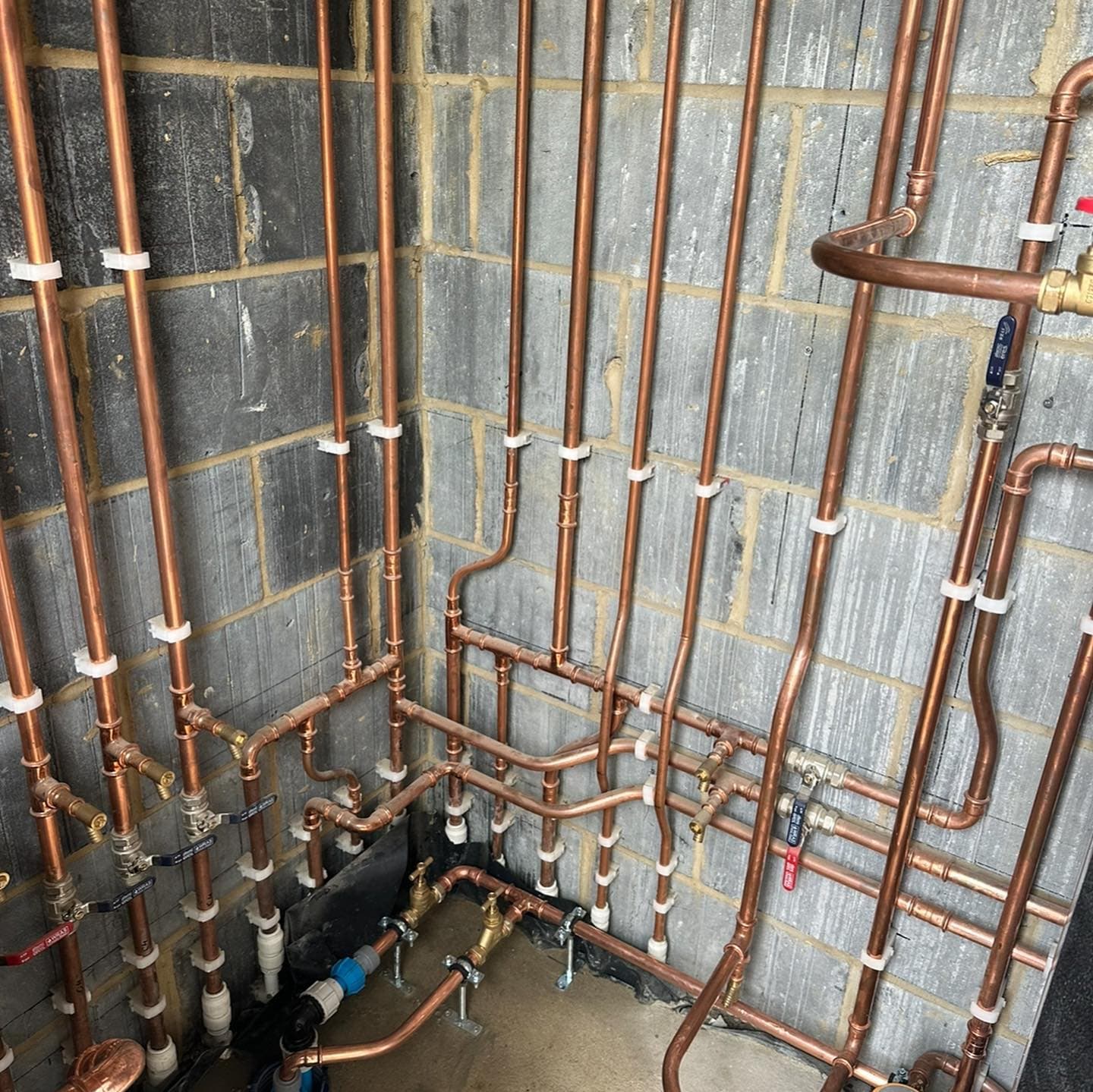
Heat pump systems for commercial buildings need proper sizing against real heat loss, emitter and cylinder design, and controls integration. We design the full system, not just the unit on the wall, and we install what we design, groundworks included.
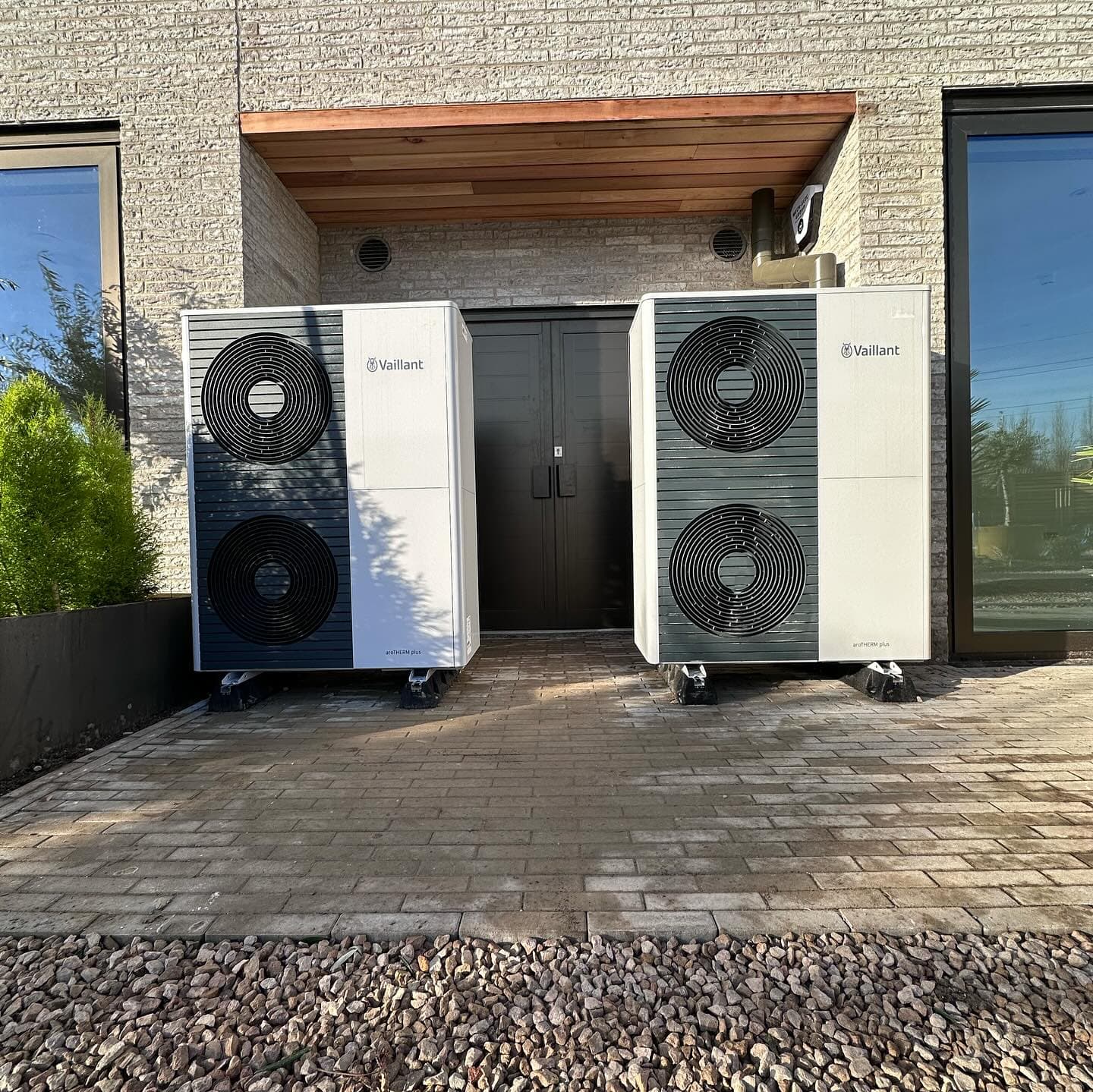
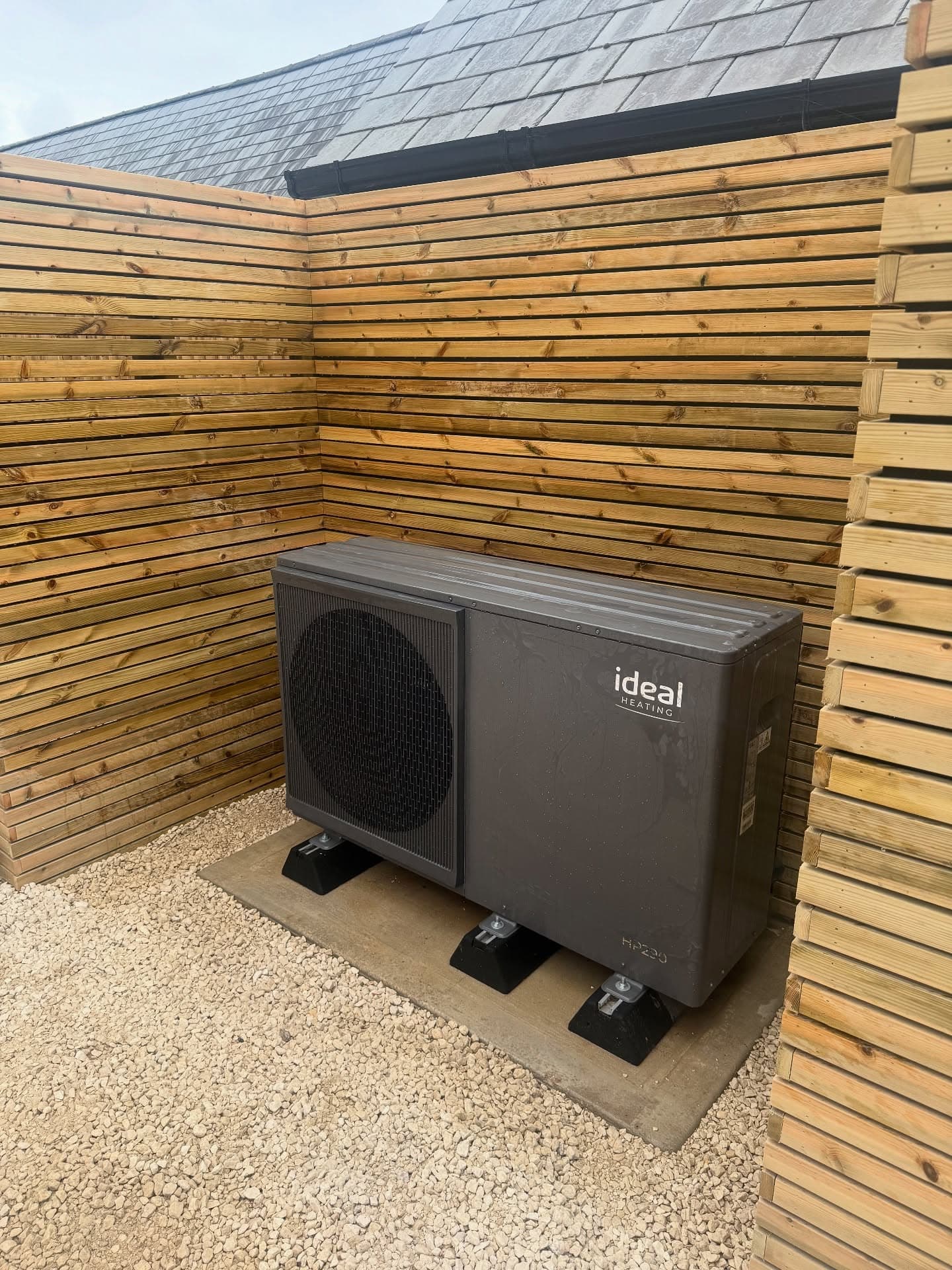
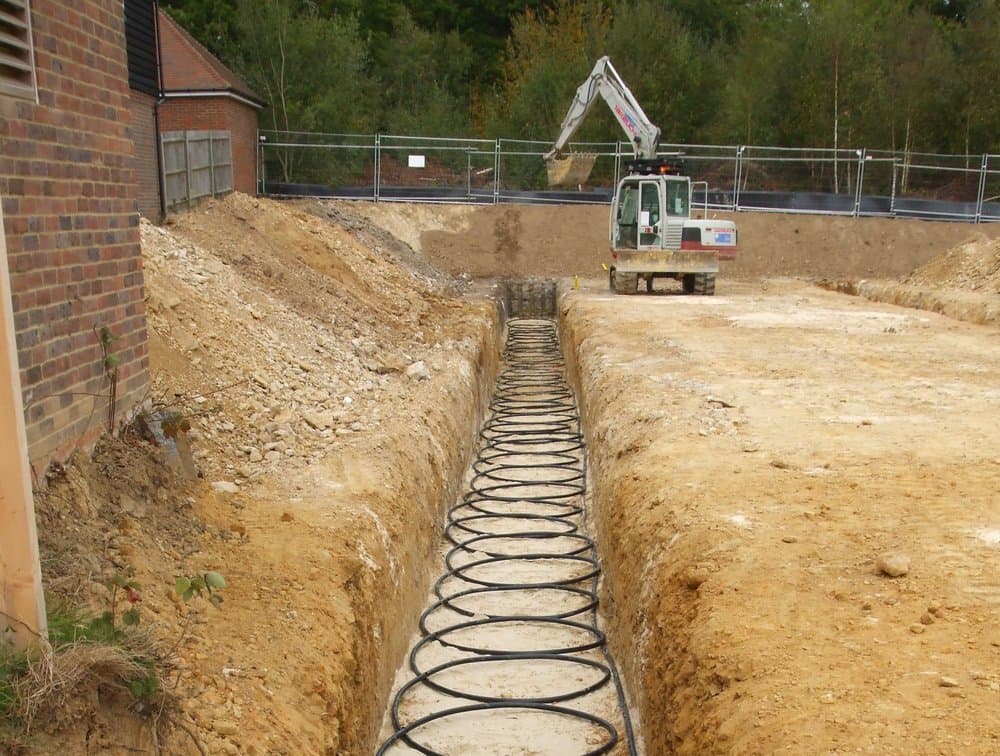
Recent work includes six Vaillant AroTherm plant installations across a new-build development at Twineham, Ideal HP290 heat pump and cylinder installations, and a genuine ground source installation with horizontal slinky collectors from trench to commissioning.
What's included
- Air source heat pump design and installation
- Ground source heat pump design, groundworks and installation
- Hybrid heat pump and boiler plant
- Cylinder, buffer and emitter design for lower flow temperatures
- Phased decarbonisation plans for estates
- MCS certification and commissioning
- Annual heat pump servicing
Commercial air source heat pumps: how they work
The simplest way to explain a heat pump is to compare it to a refrigerator running in reverse. Outside air is blown over a network of tubes filled with refrigerant, warming it from a liquid into a gas. A compressor raises the pressure of that gas, which adds more heat, in the same way an air hose warms as you pump up a tyre. The hot, compressed gas passes through a heat exchanger surrounded by cool air or water and transfers its heat into the building's heating and hot water circuits. The refrigerant condenses back to a cool liquid and the cycle begins again.
By continually moving heat from the outside air into the building, a modern commercial unit delivers efficient heating even in cooler weather, with no on-site combustion and no carbon monoxide risk.
Commercial ground source heat pumps: how they work
Ground source heat pumps harness the stable temperatures found underground. The unit is connected to ground collectors: pipes laid in horizontal trenches around 1.5 to 2 metres deep, or vertical boreholes drilled to roughly 100 metres. At those depths the ground holds a stable 10 to 12 degrees C all year.
A water and refrigerant mixture, usually called brine, circulates through the collectors and absorbs heat from the surrounding earth. It is pumped back to the heat pump, where a compressor raises its temperature to a useful level. A heat exchanger then transfers that heat into the building's distribution system: hot water cylinders, radiators or underfloor heating. After delivering its heat the fluid passes through an expansion valve, cools, and returns to the ground collectors to repeat the cycle.
When a heat pump fits a commercial building
A heat pump suits a building when it can accept lower flow temperatures or the emitters can be sized for them, there is space for the external units and their airflow, the heat loss and hot water demand have been calculated rather than estimated, and a phased or hybrid approach is on the table where a full swap is not practical.
Some buildings are not ready without significant work to the emitters or the fabric. In those cases a high-efficiency boiler, or a hybrid that pairs a heat pump with a boiler for the coldest days, is often the better answer, and we will say so.
- High efficiency and lower running costs where the design is right
- Lower carbon emissions and no on-site combustion
- No carbon monoxide risk
- Lower maintenance than combustion plant
Developments and new build
On new-build developments we design and install the heat pump plant, cylinders and underfloor heating to one specification across every plot, then commission and hand over each in sequence. Six Vaillant AroTherm plant installs at Twineham Grange Farm, with over 300 square metres of underfloor heating per plot, were delivered this way.
Case studies
Work like this
Sectors
Who we do this for
Before you call
Commercial Heat Pumps: common questions
Are you MCS accredited?
Yes. We hold our own MCS accreditation for heat pump installation and are RECC members, so installations are certificated and eligible for the schemes that require it.
Can a heat pump heat a large commercial building on its own?
Sometimes. It depends on the building's heat loss, the emitters and the hot water demand. For larger buildings we often design hybrid plant, a heat pump carrying the base load with a high-efficiency boiler for peaks and the coldest days, which cuts carbon and running cost without the risk of under-heating.
Ground source or air source?
Ground source is more efficient and quieter but needs land for trenches or access for boreholes, and a longer payback view. Air source is quicker and cheaper to install. We survey the site and the building and recommend whichever fits.
Do you also do domestic heat pumps?
Our focus is commercial, but we do take on select domestic heat pump work where capacity allows. See our domestic heating page for details, including the Boiler Upgrade Scheme grant.
Request a survey
Tell us about the building and the plant. We will arrange a survey and come back within one working day.
- Direct line
- 01273 044345
- Coverage
- Brighton & Hove, East and West Sussex, with commercial projects across London and the South East
Tell us about the building
Request a survey and we will come back within one working day. If the project is not right for us, we will say so straight away.